
| Home | Butterflies | Birds (media) | Flora and Fauna | My 5 Chickens | Daily | Spontaneous | About |
| Dragonflies | Other Photos | Observations | Species | Mexican birds | Checklists | TBP | Links |
Species account
Brown Hawker
(Aeshna grandis)
(Linnaeus, 1758)
Hawkers (Aeshnidae) [Dragonflies] BRHA 24804
Hawkers (Aeshnidae) [Dragonflies] BRHA 24804
Brun Mosaikguldsmed (dk)
Brun Mosaikslända (se)
Synonyms (common):
Amber-winged Hawker (gb)
Synonyms (scientific):
Libellula quadrifasciata Müller, 1764
Libellula nobilis Müller, 1767
Libellula rufa Müller, 1767 (nec Rambur, 1842)
Libellula flavipennis Retzius, 1783
Aeshna linnaei Ander, 1953
Measurements:
To 70-79mm Ab 49-60mm Hw 41-49mm
Generations:
Flight period:
(?):When compiling flight periods myself I mainly use citizen science data, and if so, limit to include records that have already been validated.
| J | F | M | A | M | J | J | A | S | O | N | D | |||||||||||||||||||||||||||||||||||||||||||||||||||||||||||||||||||||||||||||||||||||||||||||||||||||||||||||
| Scandinavia | ||||||||||||||||||||||||||||||||||||||||||||||||||||||||||||||||||||||||||||||||||||||||||||||||||||||||||||||||||||||||
| Europe | ||||||||||||||||||||||||||||||||||||||||||||||||||||||||||||||||||||||||||||||||||||||||||||||||||||||||||||||||||||||||
Identification:
Large and overall brown makes is unique in Denmark.
The male has a blue spot in the brown eye combined with blue markings on top of S2, distally, and on lower half of S3.
The female's thick abdomen centrally and the sharply-marked green spots on the side of thorax plus the green mark on the side of S2 distinguish it from a female Green-eyed Hawker (Kile-plet Mosaikguldsmed). The latter also flies earlier in the year.
Similar species:
Life stages:
The mating takes place in trees near the water. The solo female inserts the eggs into live or dead plant material just below the surface. The eggs overwinter and hatch the following spring. The larvae live in-between water plants or on bottom-material and develop during 2-3 years. The imago-transformation takes place in the vegetation low and near the water.
Distribution:
(?):Altitude is often taken from a specific localized resource, why the true entire range very likely is wider.
Most of Europe; absent Balkan and most of Mediterranean region except the Pyrenees and S France. Also absent Scotland and extreme N Scandinavian peninsula. Also present patchily Ukraine, Kazakhstan and Russia east to C Siberia. In Denmark present in all regions (not on Amager). Once seen in Iceland, but a ship assist can't be ruled out.
Habitat:
Behavior:
Host plants:
Iris (Iris)
Dunhammer (Typha)
Vandaks (Potamogeton)
Rotten plant material
Dunhammer (Typha)
Vandaks (Potamogeton)
Rotten plant material
Endemic:
Redlist
(?):NE: Not evaluated
NA: Not applicable
DD: Data deficient
LC: Least concern
NT: Near threatened
VU: Vulnerable
EN: Endangered
CR: Critically endangered
EW: Extinct in the wild
EX: Extinct
RE: Regionally extinct
NA: Not applicable
DD: Data deficient
LC: Least concern
NT: Near threatened
VU: Vulnerable
EN: Endangered
CR: Critically endangered
EW: Extinct in the wild
EX: Extinct
RE: Regionally extinct
LC(global) VU(eu) VU(EU) LC(dk)
Status:
Apparently decreasing in S Europe due to habitat loss, but still stable and common in Denmark and based on the latest two Atlas projects even increasing in numbers. Also stable in Sweden. Seen in all parts of Denmark including most islands, though not larger islands like Anholt, Endelave, Femø and Fejø.
|
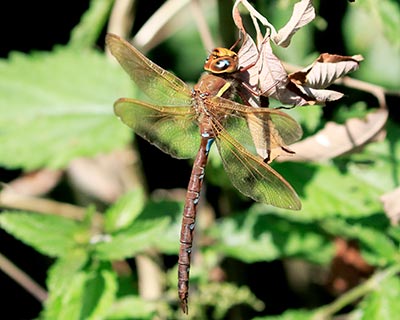
566
(3 photos)
2021-08-05 Møllekrog (Esrum sø), Denmark Imago Male |

|
2022
(2 photos)
2023-07-27 Ny Sebberup Skov (Hedensted), Denmark Imago Male Hiding in long dry grass as is their habits in favor of. |
|
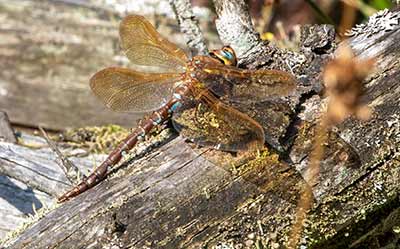
2282
(4 photos)
2023-08-27 Grib Skov (Hillerød), Denmark Imago Male Sandskredsøen. 4 different animals today patrolling the north end of the lake. |
|
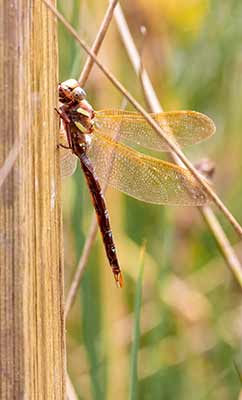
2287
(1 photos)
2023-08-27 Grib Skov (Hillerød), Denmark Imago Male Sandskredsøen. Often they prefer to sit low in the vegetation, but this corner is probably perfect for blending in. Also see 2362 for another use of the same perch. |
|
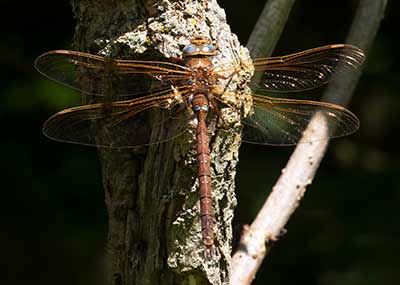
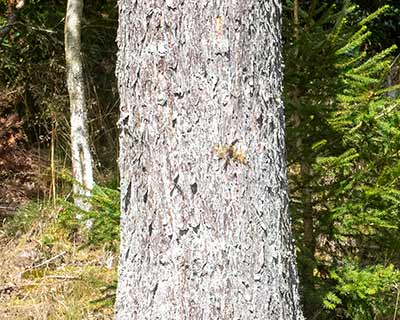
3046
(1 photos)
2024-06-14 Børstingerød Mose (sjælland), Denmark Imago Male My first this year. |
|
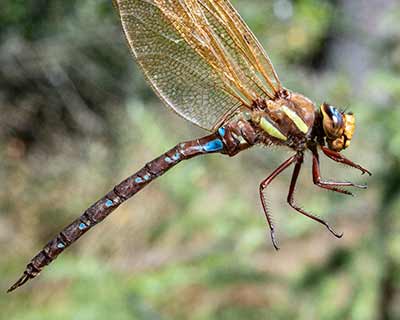
3368
(1 photos)
2025-08-24 Langkær Mose (Bryrup), Denmark Imago Male Perfect camouflage. |
|
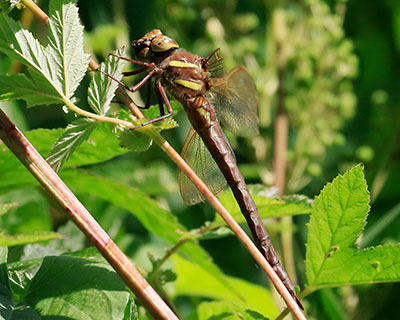
3369
(3 photos)
2025-08-24 Langkær Mose (Bryrup), Denmark Imago Male Several grandis were here, and this one had the questionable honour of serving as netting-target practice before, hopefully, being able to catch a juncea which was my main target here today. Captured |
|
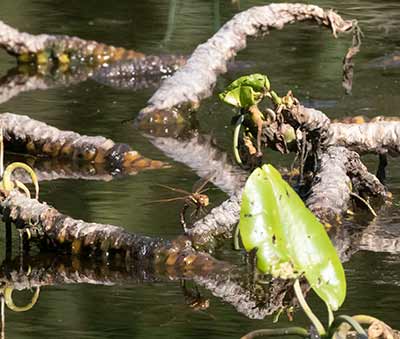
565
(2 photos)
2021-08-05 Møllekrog (Esrum sø), Denmark Imago Female This individual behaved strangely. There was just this one dragonfly present, and a good distance away over the water. Then as I spotted it with the binoculars it came straight toward me, circled a few times, and landed directly on my cheek! And then on my t-shirt, before it perched where I got these photos. Why it would do this, I have no idea. Of course I would like to think it could sense my positive and loving energy radiating toward all living things, coming to me to seek shelter and comfort in the brutal jungle world - this, well-supported by the fact that most of the left forewing has been cut, or chewed, off! |
|
1719
(1 photos)
2023-07-08 Rold Skov (midtjylland), Denmark Imago Female Bogs near Skørping. Egg-laying. |
-An early Danish record from May 19 is not confirmed: https://www.naturbasen.dk/observation/5143139/brun-mosaikguldsmed