
| Home | Butterflies | Dragonflies | Birds (media) | Flora & Fauna (media) | Observations | Species | Mexican Species |
| Download Checklists | Links | My 5 Chickens | Other Photos | The Birding Program | About | GPS | News |
Species account
Arktisk Smaragdlibel
(Somatochlora arctica)
Zetterstedt (1840)
Smaragdlibeller og lignende (Corduliidae)
NOEM
24816
Northern Emerald (gb)
Mindre Glanstrollslända (se)
Synonyms: Moorland Emerald (gb)
Measurements:
To 45-51mm Ab 30-37mm Hw 28-35mm
Flight period:
| J | F | M | A | M | J | J | A | S | O | N | D | |||||||||||||||||||||||||||||||||||||||||||||||||||||||||||||||||||||||||||||||||||||||||||||||||||||||||||||
| SE | ||||||||||||||||||||||||||||||||||||||||||||||||||||||||||||||||||||||||||||||||||||||||||||||||||||||||||||||||||||||||
| EU | ||||||||||||||||||||||||||||||||||||||||||||||||||||||||||||||||||||||||||||||||||||||||||||||||||||||||||||||||||||||||
Identification:
Similar species:
Life stages:
After mating in low bushes or other vegetation the solo flying female drops the eggs into the water or wet plant material. The eggs hatch after about 3 weeks and the larvae live at the bottom in-between mosses and other water plants and develop during 2-3 years. The imago-transformation takes place low and near the water shore.
Distribution:
Central Europe from France to Poland. Also present locally on Ireland, Scotland, Denmark, Fennoscandinavia and the Baltics. Also local in Bulgaria and Romania and patchily throughout the Russian territory east to Kamchatka. Also Japan. In Denmark restricted to small populations in mid-central Jylland, Rold Skov and Lille Vildmose - last two in northern Jylland.
Habitat:
Behavior:
Status:
LC(global)
LC(eu) EN(dk). In Denmark very local and threatened by habitat loss. Isolation from Swedish or German populations makes it less likely that the population can be boosted from outside.
Comment:
|
1762
(3 photos)
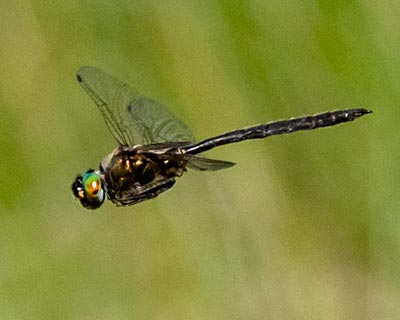
2023-07-08 Rold Skov (midtjylland), Denmark Imago ♂ Bogs near Skørping. Lifer and the main target of the trip. We only found this animal with certainty, why we might have been too early for the major flight period. It behaved like most male emeralds tirelessly patrolling the area a few meters above ground. The dark lanky abdomen without traces of yellow spots is good for the species, as is the isolated yellow spot on the side of the face and the blue-gray color low on the eye toward the rear end. Unfortunately I didn't get a view of characteristic appendages. |