
| Home | Butterflies | Birds (media) | Flora and Fauna | My 5 Chickens | Daily | Spontaneous | About |
| Dragonflies | Other Photos | Observations | Species | Mexican birds | Checklists | TBP | Links |
Species account
Spearhead Bluet
(Coenagrion hastulatum)
(Charpentier, 1825)
Pond Damselflies (Coenagrionidae) [Dragonflies] SPBL 24788
Pond Damselflies (Coenagrionidae) [Dragonflies] SPBL 24788
Spyd-vandnymfe (dk)
Azulado Montañés (es)
Spjutflickslända (se)
Synonyms (common):
Northern Damselfly (uk) Agrion Boreoalpino (es) T-tekcnad Flickslända (se)
Synonyms (scientific):
Agrion elegantulum Zetterstedt, 1840
Measurements:
To 31-33mm Ab 22-26mm Hw 16-22mm
Generations:
Flight period:
(?):When compiling flight periods myself I mainly use citizen science data, and if so, limit to include records that have already been validated.
| J | F | M | A | M | J | J | A | S | O | N | D | |||||||||||||||||||||||||||||||||||||||||||||||||||||||||||||||||||||||||||||||||||||||||||||||||||||||||||||
| Scandinavia | ||||||||||||||||||||||||||||||||||||||||||||||||||||||||||||||||||||||||||||||||||||||||||||||||||||||||||||||||||||||||
| Europe | ||||||||||||||||||||||||||||||||||||||||||||||||||||||||||||||||||||||||||||||||||||||||||||||||||||||||||||||||||||||||
Identification:
Similar species:
Life stages:
Mating takes place in dry vegetation and lasts about 15 minutes. In tandem the female inserts the eggs into stems and leaves of water plants while sitting on floating plants. Occasionally the female submerges to insert the eggs under water, while the male stays out of the water as much as possible. The eggs hatch after 3-5 weeks and the larvae develop during 1-2 years. They overwinter in the final larva-stage and the imago-transformation takes place when the water temperature is high enough (20C), close to the water and low on the plants.
Distribution:
(?):Altitude is often taken from a specific localized resource, why the true entire range very likely is wider.
Central and northeastern Europe; absent Mediterranean region and southern part of British Isles. Also patchily east through Russia and C and E Siberia to Kamchatka and Korean peninsula. In Denmark mostly Jylland, NE Sjælland and Bornholm.
Habitat:
Behavior:
Host plants:
Vandaks (Potamogeton)
Hornblad (Ceratophyllum)
Dynd-padderok (Equisetum)
and rotten plant material
Hornblad (Ceratophyllum)
Dynd-padderok (Equisetum)
and rotten plant material
Endemic:
Redlist
(?):NE: Not evaluated
NA: Not applicable
DD: Data deficient
LC: Least concern
NT: Near threatened
VU: Vulnerable
EN: Endangered
CR: Critically endangered
EW: Extinct in the wild
EX: Extinct
RE: Regionally extinct
NA: Not applicable
DD: Data deficient
LC: Least concern
NT: Near threatened
VU: Vulnerable
EN: Endangered
CR: Critically endangered
EW: Extinct in the wild
EX: Extinct
RE: Regionally extinct
LC(global) VU(eu) VU(EU) LC(dk)
Status:
In Denmark scarce where present. Most common central Jylland and Bornholm. Probably declining in Europe in general.
Comment:
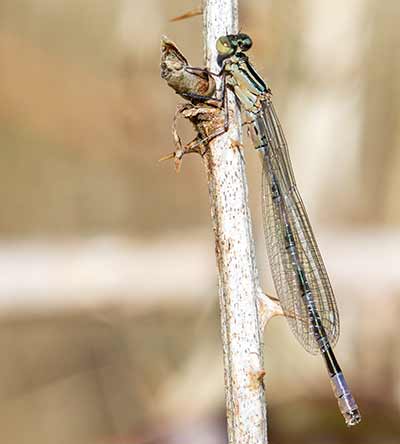
|
1363
(3 photos)
2023-05-07 Bastemosen (Bornholm), Denmark Imago Male Teneral. |

|
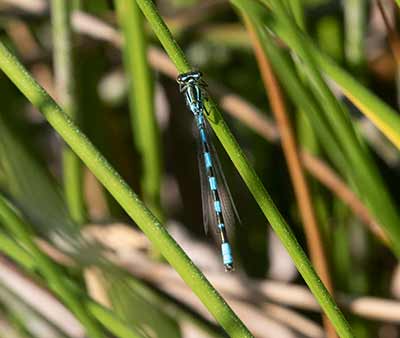
1522
(1 photos)
2023-06-06 Fjällmossen (Östergötland), Sweden Imago Male First took it for a lunulatum (Måne-vandnymfe) but the blue underside and the apparent single pointed black marking on S3 in combination with pear-shaped eyespots connected by a line all point in the direction of a hastulatum. |
|
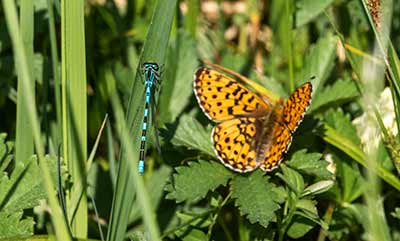
1585
(1 photos)
2023-06-07 Hästenäs Kyrkskog (Östergötland), Sweden Imago Male |
|
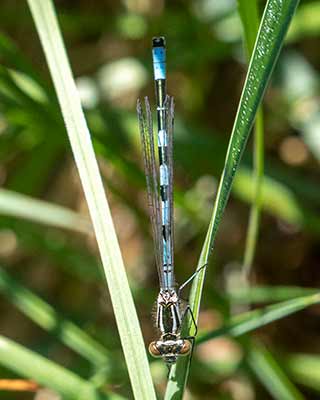
1586
(1 photos)
2023-06-07 Valdemarsvik (Östergötland), Sweden Imago Male |
|
2737
(3 photos)
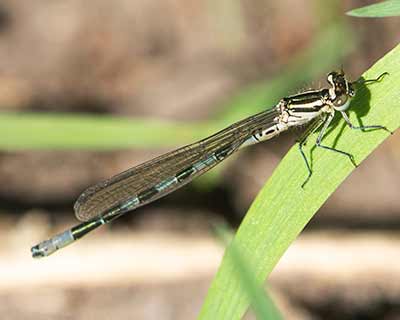
2024-05-12 Nygårdsmark-søerne (Finderup), Denmark Imago Male Young. At first I took it for a lunulatum [Måne-vandnymfe], mainly because of the S2-pattern that looks more like the standard pattern of that species (It's difficult to see if a streak is connecting the black parts, but it looks so in photo 3). But several details talk in favor of hastulatum: More blue than black on the first abdomenal segments, the shape of the pronotum edge, the eyes connected by a line. It is known that the S2-pattern is highly variable and should never be used alone when identifying boogawoogy bluets. |
|
2740
(1 photos)
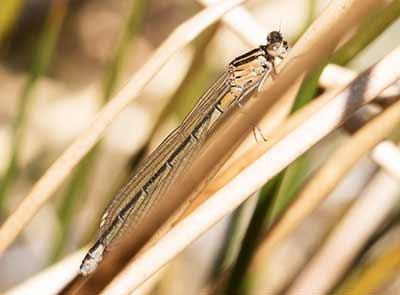
2024-05-12 Nygårdsmark-søerne (Finderup), Denmark Imago Male Young. Another good example of an animal where you can't just look at S2 and think you are a clever guy! Again, I took this for a lunulatum [Måne-vandnymfe], but the combined details reveals it as a hastulatum. |
|
1357
(2 photos)
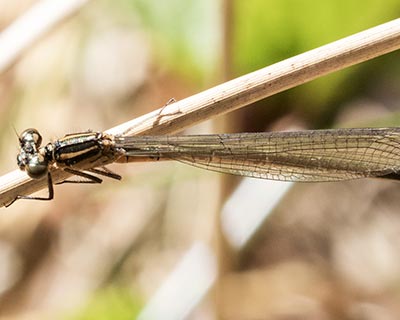
2023-05-07 Bastemosen (Bornholm), Denmark Imago Female Teneral. |
|
1358
(3 photos)
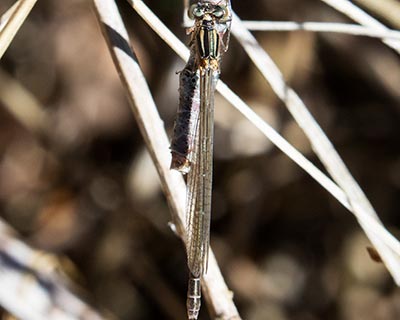
2023-05-07 Bastemosen (Bornholm), Denmark Imago Female Teneral. |
|
1359
(1 photos)
2023-05-07 Bastemosen (Bornholm), Denmark Imago Female Teneral. |
|
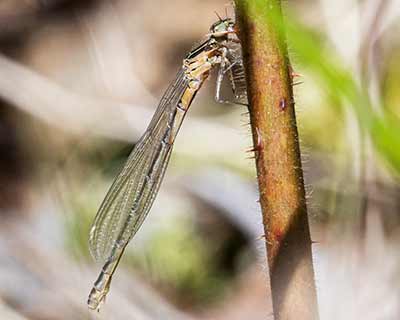
1360
(2 photos)
2023-05-07 Bastemosen (Bornholm), Denmark Imago Female Teneral. |
|
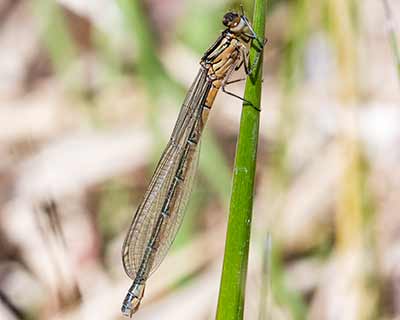
1361
(3 photos)
2023-05-07 Bastemosen (Bornholm), Denmark Imago Female Teneral. |
|
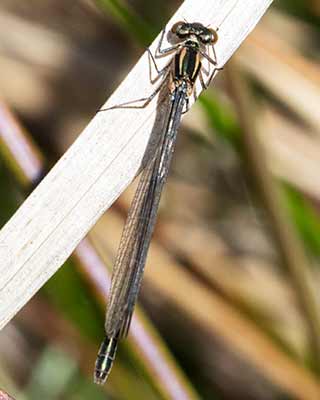
1362
(1 photos)
2023-05-07 Bastemosen (Bornholm), Denmark Imago Female Teneral. |
|
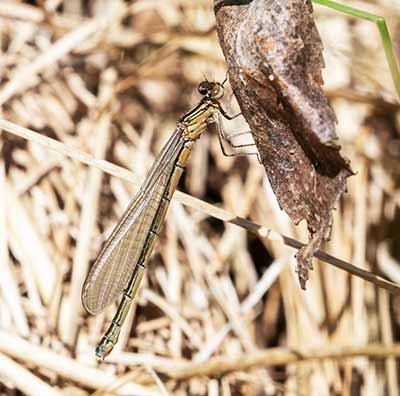
1364
(2 photos)
2023-05-07 Bastemosen (Bornholm), Denmark Imago Female Teneral. |
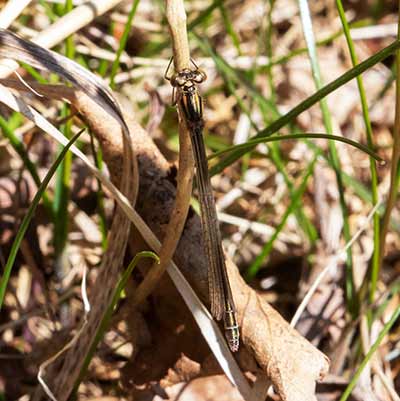
|
1365
(1 photos)
2023-05-07 Bastemosen (Bornholm), Denmark Imago Female Teneral. |