
| Home | Butterflies | Dragonflies | Birds (media) | Flora & Fauna (media) | Observations | Species taxonomy |
| Mexican Species | Download Checklists | Links | My 5 Chickens | Other Photos | The Birding Program | About |
Species account
Large Red Damsel
(Pyrrhosoma nymphula)
Sulzer (1776)
Red Damsels and Bluets (Coenagrionidae)
LRDA
24783
Rød Vandnymfe (dk)
Caballito de Fuego (es)
Röd Flickslända (se)
Synonyms: Large Red Damselfly (gb)
Measurements:
To 33-36mm Ab 25-30mm Hw 19-24mm
Flight period:
| J | F | M | A | M | J | J | A | S | O | N | D | |||||||||||||||||||||||||||||||||||||||||||||||||||||||||||||||||||||||||||||||||||||||||||||||||||||||||||||
| SE | ||||||||||||||||||||||||||||||||||||||||||||||||||||||||||||||||||||||||||||||||||||||||||||||||||||||||||||||||||||||||
| EU | ||||||||||||||||||||||||||||||||||||||||||||||||||||||||||||||||||||||||||||||||||||||||||||||||||||||||||||||||||||||||
Identification:
Males can look like females of form fulvipes. Look for black appendages and more red on the distal segments.
Similar species:
Life stages:
Females, in tandem, normally insert eggs into surface plant material, but at times the pair submerge. The eggs hatch in a few weeks, and the larvae develop during 1-3 years, normally 2 years.
Distribution:
Most of Europe; only southern half of Scandinavian peninsula. Also NW Africa and eastward through Turkey and Russia to the Ural Mountains. In Denmark present in most parts except for Lolland and Falster. Also not on Amager.
Habitat:
Behavior:
Territorial in larval stadium (unique).
Status:
LC(global)
LC(eu) LC(dk). Not a numerous species but positive increasing trends in all of Scandinavian countries.
Host plants:
Vandaks (Potomogeton)
Hornblad (Ceratophyllum)
other plants and dead plant material
Hornblad (Ceratophyllum)
other plants and dead plant material
Comment:

|
1230
(1 photos)
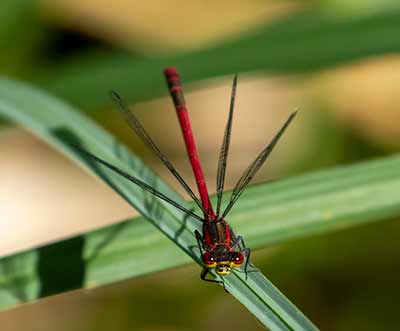
2021-06-05 Store Bøgeskov (Ringsted), Denmark
Imago ♂ |
||||||||||||
|
1231
(1 photos)
2021-06-05 Store Bøgeskov (Ringsted), Denmark
Imago ♂ |
||||||||||||

|
1232
(1 photos)
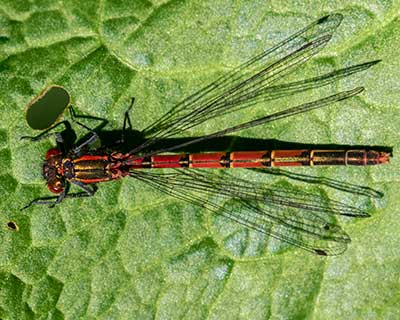
2021-06-05 Store Bøgeskov (Ringsted), Denmark
Imago ♂ |
||||||||||||
|
1233
(2 photos)
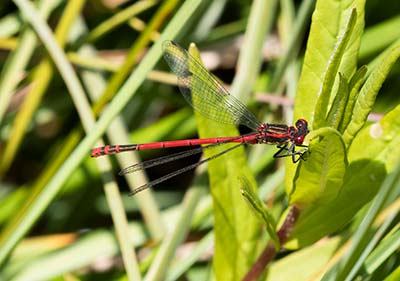
2021-06-05 Store Bøgeskov (Ringsted), Denmark
Imago ♀ Form: Typica. |
||||||||||||
|
800
(3 photos)
2022-06-18 Teglstrup Hegn (nordsjælland), Denmark
Imago ♂ Only black lines separating the segments indicates the sex. Only a few seen. |
||||||||||||

|
1577
(1 photos)
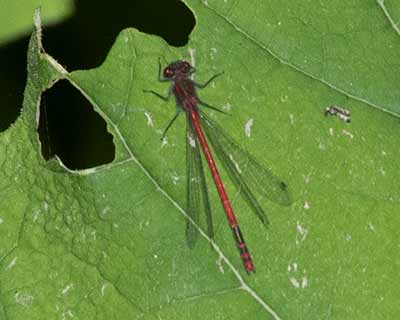
2023-06-07 Valdemarsvik (Östergötland), Sweden
Imago ♂ We only saw a few of this species on the trip. |
||||||||||||
|
2729
(4 photos)
2024-06-04 Søndermarken (Frederiksberg), Denmark
Imago Different animals. 12 seen in all. An unusual observation with no other populations in the urban Copenhagen area. Found by Bo Nielsen who told me a good week ago. The habitat is a very restricted pool in the park with moist and lush surroundings and with mature deciduous forest around it. I think it is the first record from the park, why these animals very likely are the outcome of the ongoing expansion of the species which has been a fact for some years. Apparently they prefer pools and slow flowing water in mature forests which are not common in Copenhagen or on Amager, where I, nevertheless, hope to find it in Kongelunden soon! |